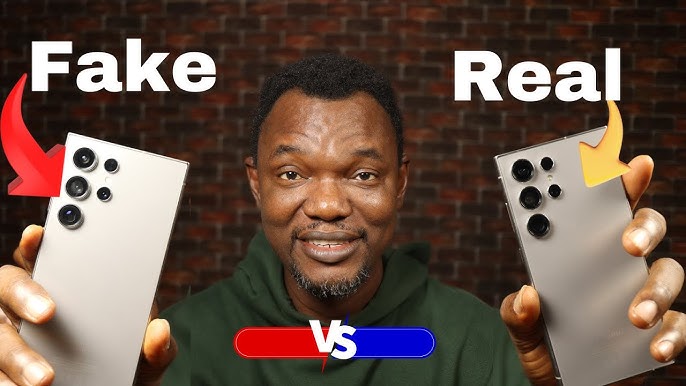
Protect yourself from counterfeit smartphones with these proven verification methods
Introduction: The Hidden Crisis in Kampala’s Phone Market
If you’ve shopped for a phone in downtown Kampala or browsed Facebook Marketplace, you’ve probably heard the warning: “Check well, some of these phones are fake.”
It’s not paranoia. According to a Uganda Communications Commission (UCC) survey, 34% of phones in Uganda are counterfeit . That’s more than one in every three devices. Electronics fraud costs Ugandan consumers an estimated Shs 200 billion annually .
Counterfeit phones aren’t just a waste of money — they’re a genuine risk. These devices are not tested for safety and can expose users to harmful radioactive emissions. There have been cases where counterfeit phone batteries exploded and injured people . They often overheat, freeze, and fail within months .
But here’s the good news: you can protect yourself. The Ugandan government and UCC have launched the Simu Klear system, a Central Equipment Identity Registry (CEIR) that helps consumers verify genuine devices . This guide combines official verification tools with practical inspection tips to help you buy with confidence.
What Makes a Phone “Fake” or “Counterfeit”?
According to the Uganda Communications Commission, a counterfeit phone is one that:
- Is not produced by the original manufacturer
- Has a duplicate or tampered IMEI number
- May be associated with a genuine IMEI that wasn’t assigned to that particular phone
Common types of fake phones in Kampala:
| Type | Description | Example |
|---|---|---|
| Complete counterfeit | Cheap imitation, often with misspelled brand names | “Nckia” instead of “Nokia”, “Samsong” instead of “Samsung” |
| Rebranded/refurbished | Used phone sold as new, often with replacement parts | Common in downtown Kampala shops |
| Cloned IMEI | Duplicate IMEI number from a genuine phone | Harder to detect without verification |
| Sub-standard imports | Phones that don’t meet safety/quality standards | Often enter through informal channels |
Why this matters: A counterfeit phone that’s UGX 50,000 cheaper isn’t a bargain if it stops working in three months, can’t be repaired, has no warranty, and may even be a health risk.
How to Spot a Fake Phone: 7 Essential Checks
1. Check the IMEI Number (Most Reliable Method)
Every genuine phone has a unique 15-digit International Mobile Equipment Identity (IMEI) number. This is the device’s fingerprint .
Step 1: Get the IMEI
- Dial ***#06#** on the phone (no SIM card needed)
- The IMEI number(s) will appear on your screen
- For dual-SIM phones, you’ll see two IMEI numbers
Step 2: Verify It
- Compare the IMEI on the screen to the one printed on:
- The phone’s box
- The SIM tray (if removable)
- The phone’s back or under the battery
- If they don’t match — walk away
Step 3: Use UCC’s Simu Klear System
- Visit simu.ucc.co.ug on your phone, tablet, or computer
- Enter the IMEI number to check if the device is genuine
- You can also dial 1974# to get a confirmation message directly on your phone
- The system will tell you the manufacturer and model the IMEI belongs to — if these don’t match the phone you’re holding, it’s fake
Pro Tip: Some counterfeiters use fake IMEI numbers with specific patterns. In the past, fake phones had IMEIs where the 7th and 8th digits ended with 00, 02, or 20 . While this pattern isn’t guaranteed for all counterfeits, it’s a useful red flag to know.
2. Inspect the Packaging Closely
Counterfeiters have gotten better at copying packaging, but they still make mistakes .
What to look for:
| Element | Genuine | Fake |
|---|---|---|
| Printing quality | Sharp, crisp, professional | Blurry, faded, or pixelated |
| Brand name spelling | Correct (e.g., “Samsung”) | Misspelled (“Samsong”, “Samung”) |
| Cardboard quality | Sturdy, thick | Thin, flimsy, “cheap” feel |
| Hologram/security seal | Present, authentic-looking | Missing, poorly copied |
| UNBS stickers | Present and genuine | Missing or fake |
Real example: A woman of Chinese origin was arrested in Kampala for selling fake Samsung Galaxy phones in boxes that looked convincing at first glance. The phones were priced at UGX 160,000 — compared to the genuine price of over UGX 1.2 million .
3. Weigh It in Your Hand (Physical Inspection)
Fake phones often use cheaper components and feel noticeably different from genuine ones.
What to check:
- Weight: Counterfeit phones feel lighter or “hollow” compared to the genuine model
- Build quality: Plastic feels cheap, creaks when pressed, or has visible gaps
- Screen: Poor viewing angles, visible pixels, or odd colour tint
- Smell: A strong chemical “cheap plastic” odour is a warning sign
- Brand logo: Should be crisp and permanent — if it looks like it could rub off, be suspicious
If you’ve handled the genuine version before, the difference is usually obvious. If you haven’t, compare it to a display model in an authorised shop.
4. Test the Phone Before You Pay (Non-Negotiable)
Never accept a phone in a sealed box without testing it in front of the seller.
Your testing checklist:
| Test | What to Check |
|---|---|
| Make a call | Sound quality clear, no interference |
| Camera | Take photos/videos; check quality matches the model |
| Fingerprint sensor | Works consistently |
| Face unlock | Works properly |
| Storage | Fake phones often show 128GB in settings but can only store a fraction before overwriting files |
| Screen touch | Responsive everywhere, no dead spots |
| Speakers | Clear sound, no distortion |
| Charging port | Cable fits snugly, charges consistently |
| WiFi/Bluetooth | Connects properly |
| Box contents | All accessories present (charger, cable, earphones) |
Red flag: A seller who rushes you or refuses to let you test the phone thoroughly.
5. Check the Price (If It’s Too Good to Be True…)
This is one of the simplest but most effective tests.
The Rule: If a phone is priced more than 20% below the market rate, exercise extreme caution .
Real examples:
| Phone Model | Genuine Price (UGX) | Fake Price (UGX) | Difference |
|---|---|---|---|
| Samsung Galaxy S-series | 1,200,000+ | 160,000 | 86% below market |
| Premium smartphones | Market rate | Suspiciously low | Often 30-50% below |
Why it matters: A Chinese woman was arrested on Jinja Road after trying to sell a “Samsung Galaxy” for UGX 160,000 — less than one-sixth of the genuine price . Victims who bought earlier found the phones stopped working within a week .
Kampala Pro Tip: Research current prices on platforms like Yoola or check with multiple authorised dealers before shopping. This gives you a realistic benchmark.
6. Buy From a Shop With a Physical Address
Online-only sellers with no shop you can visit are far riskier than a business with an actual location.
Why this matters:
- Accountability: If something goes wrong, you need somewhere to return to
- Verification: You can test the phone before buying
- Warranty: Physical shops are more likely to honour warranties
- Trust: A business with a physical address is more likely to be legitimate
The Simu Klear system will soon list verified phone vendors across the country to help consumers identify legitimate sellers .
Red flags: Sellers who operate from temporary locations, meet you on the street, or have no business registration.
7. Demand Proper Documentation
Legitimate sellers provide proper documentation. Counterfeiters avoid leaving paper trails.
What to demand:
- Fiscal receipt (EFRIS) with a TIN number
- Warranty card with official manufacturer service centre details
- Serial number written on the receipt
- Company invoice with full details
Warning signs:
- Seller offers only a handwritten note
- Warranty card only lists the shop (not the manufacturer)
- Seller refuses or makes excuses not to provide a proper receipt
New Protection: The Simu Klear System
The Uganda Communications Commission launched the Central Equipment Identity Registry (CEIR) — also known as Simu Klear — in October 2025 . This is a groundbreaking system to protect consumers and eliminate counterfeit and stolen phones.
How Simu Klear Works:
| Feature | What It Does |
|---|---|
| Know Your Device | Check any phone’s genuineness by entering its IMEI |
| Know Your Numbers | See all mobile numbers registered under your National ID |
| Report Lost/Stolen | Block stolen phones across all networks |
| Certified Vendors | Identify legitimate phone sellers |
| Report Fraud | Submit fraud complaints with evidence |
How to Use Simu Klear:
- Website: Visit simu.ucc.co.ug
- USSD: Dial 1974#
- IMEI verification: Enter the IMEI number after dialling ***#06#**
What this means for you: Before buying any phone — especially second-hand — you can now verify it in seconds using this official system. If the phone doesn’t match what the seller claims, don’t buy it.
FAQ: Frequently Asked Questions
How can I check if a phone is genuine before buying in Kampala?
Dial ***#06#** to get the IMEI number, then verify it using the Simu Klear system on simu.ucc.co.ug or by dialling 1974#. Also compare the IMEI to what’s printed on the box and SIM tray. Always test the phone in front of the seller before paying .
Is it safe to buy phones from Kampala street vendors?
It carries significantly more risk than buying from a shop with a fixed address. Street vendors have no location to return to if the phone develops a fault or turns out to be counterfeit. Stick to authorised dealers and verified sellers .
Why are counterfeit phones dangerous?
Counterfeit phones are not tested for safety. They can emit harmful radiation, overheat, catch fire, or explode. Medical experts warn these devices expose users to health risks, and there have been cases of batteries exploding and injuring people .
How can I tell if a phone is refurbished vs. counterfeit?
Refurbished phones are genuine devices that have been restored to working condition. They should still have a valid IMEI that matches the manufacturer’s records. Counterfeit phones have fake or cloned IMEIs. Always verify through Simu Klear .
What should I do if I’ve already bought a counterfeit phone?
Report the incident to the police and to UCC through their consumer portal (consumer.ucc.co.ug) or by calling their toll-free line: 0800222777. You can also report via WhatsApp at 0760445256 .
Summary: Your Anti-Counterfeit Checklist
Before handing over any money:
- Check IMEI — Dial ***#06#**, verify on simu.ucc.co.ug or 1974#
- Compare IMEI — Screen number matches box and SIM tray
- Inspect packaging — No spelling errors, quality printing
- Physical feel — Correct weight, no “hollow” feel
- Test the phone — Call, camera, fingerprint, storage
- Price check — Not too good to be true
- Seller address — Physical, verifiable location
- Documentation — EFRIS receipt, proper warranty
- Trust your instincts — If it feels shady, walk away
Buy with Confidence at Mutoni Phone Hub
At Mutoni Phone Hub, every device is:
- IMEI-verified before it reaches you
- Physically inspected for quality
- Tested for full functionality
- Backed by warranty
- Sourced from legitimate channels
We are a physical shop in Kampala — visit us, test the phones, and buy with confidence.
🚚 Delivery: Available across Kampala
Mutoni Phone Hub — Kampala’s trusted source for genuine phones. Verify before you buy.